
Every community project starts somewhere. With a conversation. A cup of tea. A few people asking, “What if we tried this?” Or simply noticing what people around them need.
The National Lottery Community Fund [NC1] is celebrating those starts – the moments when people come together and decide to act. Because even small actions can grow into something that really makes a difference.
Across Bristol, communities are already taking environmental action in their own ways, in their own places. Not waiting for permission. Just getting on with it. Along the way, people are finding benefits they didn’t expect – saving money, building skills, feeling more connected, and finding joy in the places they call home.
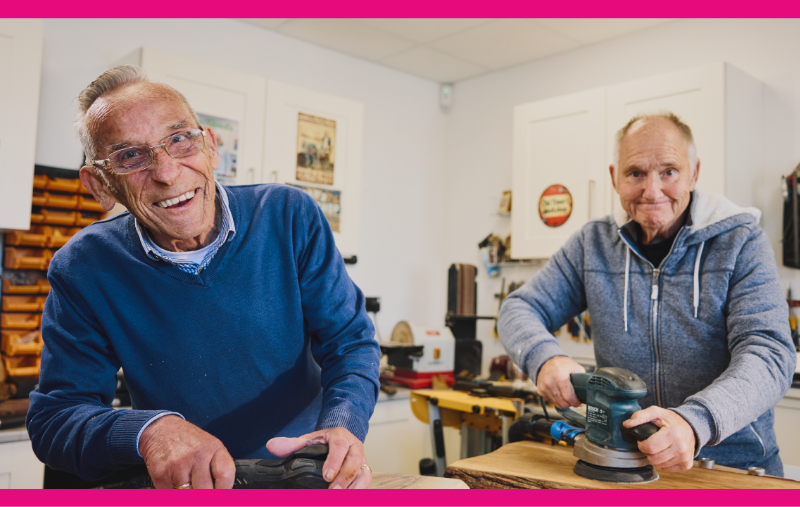
For Nobby and Jim, it started with fixing things.
These days, many of us have replaced repairing household items with throwing them away and buying new ones. But for friends Nobby and Jim, that never felt right.
Nobby always enjoyed making and mending. His shed at home became a place to tinker, repair household items and work with his hands. When he retired, he began wondering how those skills could be shared with others. Jim felt the same. Between them, they had time, experience and a belief that practical knowledge should not be lost.
So, they asked a simple question: what if we fixed things together instead?
Their answer was Ambition Lawrence Weston’s Men in Sheds – a community project where people of all ages can learn practical skills, repair everyday items and spend time together. It is about more than fixing things. It’s about reducing waste, sharing skills, and creating a place where people feel welcome and useful.
At first they lacked the equipment and space to open it up to others. Funding helped change that. With the right tools and machinery, Men in Sheds became a welcoming place where people could learn, repair and connect.
It is not a typical environment [NC2] project – but it’s a powerful one. By repairing instead of replacing, they are reducing waste and helping the planet. By doing it together, they are also supporting wellbeing and tackling loneliness.
And yes, there’s plenty of tea along the way.
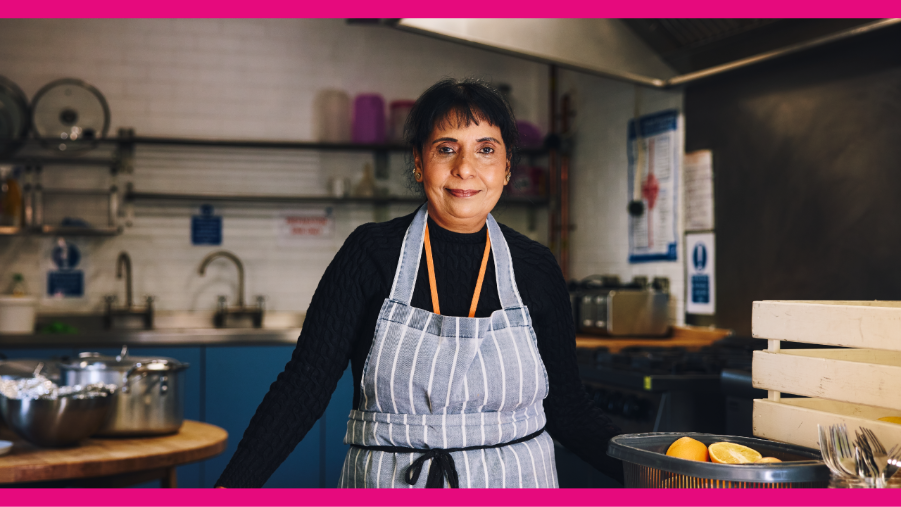
For Nirmal, it started with feeding people.
Sometimes environmental action looks like repairing old tools in a workshop. Sometimes it looks like a hot meal shared after school.
At Felix Road Adventure Playground at Eastside Community Trust, environmental action happens alongside the sound of children laughing, footballs thudding against fences, and bikes rattling across the playground.
But this is more than swings and climbing frames. Six days a week, children can turn up, no questions asked, and receive a hot meal. For some, it’s a treat at the end of the day. For others, it’s something they rely on. Either way, everyone is welcome.
For almost 15 years, Nirmal has been at the heart of this space, helping families access nourishing food, learn where it comes from and feel at home.
She first came to Felix Road through community workshops focused on saving money and reducing energy use at home. Later, she became involved in the community garden, where volunteers and children grew vegetables like cabbages, pumpkins, potatoes and tomatoes.
For many children, it was the first time they had seen how food grows or tried new vegetables. Meals became a chance to learn as well as eat. Together, they picked the vegetables, washed them and talked about how they would cook them.
Drawing on more than 20 years of experience managing a local takeaway, Nirmal saw another opportunity. She suggested using the vegetables grown on site to cook meals for the community – celebrating different cultures, flavours and recipes around the table.
With support from tThe National Lottery Community Fund, that idea became a paid role. Nirmal became the kitchen coordinator, helping make hot meals a natural and welcoming part of open-access play sessions rather than something separate from the day.
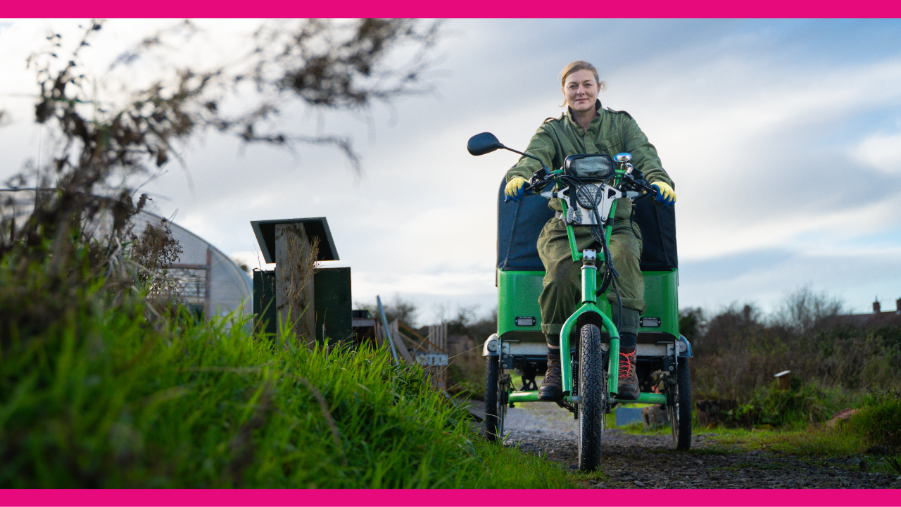
For Jen, it started with a need for support.
Often, community environmental [NC3] action starts with people finding support for themselves.
After becoming newly single while raising three children, Jen was searching for stability, routine and connection. She found all three at the Heart of BS13 farm in south Bristol.
Heart of BS13 is a community-run flower and food farm that brings people together to grow, learn and act on climate and health. Helping in the community garden gave Jen fresh air, routine and a place where people looked out for one another. She learned new skills, built friendships and felt her wellbeing improve.
With support from The National Lottery Community Fund, Jen’s volunteering grew into paid work and she became Heart of BS13’s Closed Loop Compost Coordinator – their resident “compost expert”.
She now collects food waste using BS13’s e-Carbon trike, a familiar sight around the neighbourhood. Working with over 60 households, she helps people separate food waste from general rubbish and collects compost from local schools and businesses. The compost created at the farm even outperforms many shop-bought soils.
“Our composting project has given lots of people the opportunity to learn about climate action and how they can be involved,” Jen says. “On the flower farm we give people the chance to learn new skills, get their hands dirty, feel good about themselves and make a difference. To just be together and tackle that loneliness.”
Jen also works with local schools, sharing her knowledge and encouraging young people to get involved. By doing practical work together, people are feeling less lonely and more confident while doing good for the planet. Often, it starts with a conversation, a shovel or a cuppa.
These projects are part of the wider Community Climate & Nature Action Project, coordinated by Bristol Climate & Nature Partnership and supported by the Climate Action Fund (CAF), through[HF4] The National Lottery Community Fund. CAF supports communities across the UK to act on climate change and involve more people in environmental actio
Find out more at www.tnlcommunityfund.org.uk/it-started