
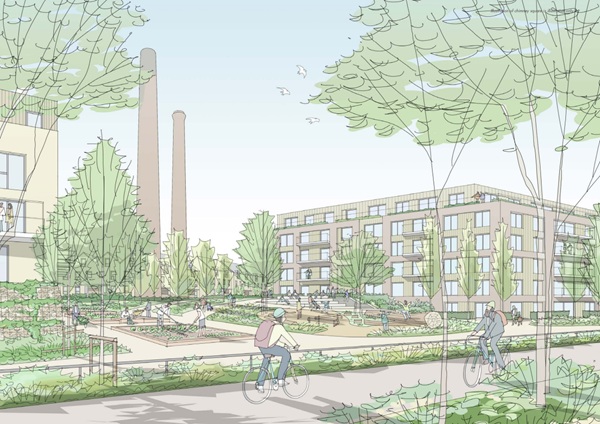
COUNCILLORS are being recommended to approve plans to knock down two buildings used by Fishponds businesses and replace them with 380 new homes.
The Filwood House and Verona House industrial sites off Filwood Road, which currently host workshops, offices and warehouses, would be redeveloped into a new neighbourhood next to the Bristol & Bath Railway Path. as part as the Atlas Place project
The plans by developer Central Fishponds are due to be voted on by a city council planning committee next Wednesday.
The vote will only be on whether to give outline planning permission for the access works on the site, but if this is approved other issues such as the appearance, layout, landscaping and scale of the site will be reserved for later decisions.
But the council report on the plans includes considerations from the effect on school places and GP surgeries to housing density and the retention of landmark industrial chimneys on the site.
Planning officers have recommended that councillors permit the plans, however locals are warning that nearby GP surgeries are already at capacity, and the surrounding streets would become even more congested.
In planning documents, consultants BNP Paribas said: “The proposed scheme aims to contribute positively to the wider Fishponds area, creating a vibrant, green, and sustainable development that provides much-needed homes, high-quality public spaces, and improved active travel connections.
“It seeks to integrate sensitively into the existing landscape while setting a strong precedent for future development in Fishponds and across Bristol.
“Our ambition is to deliver a sustainable and inclusive development that brings long-term social, economic, and environmental benefits to Fishponds.”
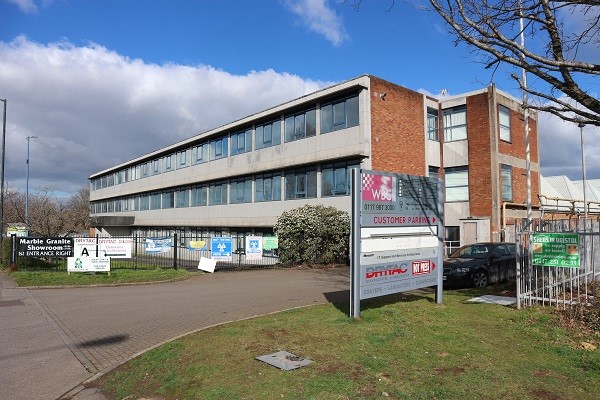
Verona House on Filwood Road
After criticism about the loss of places for people to work, the developers redesigned their plans to include 730 square metres of employment space that could be used by a range of businesses. Another concern is that none of the new homes would be affordable.
The council’s official target is 30%, but officers said the lack of affordable housing was “acceptable in the circumstances”, given high building costs.
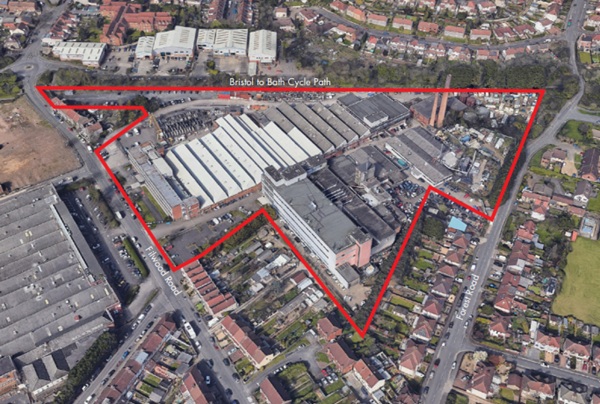
A new footpath and cycling route would be created through the site, including a new link to the Bristol and Bath Railway Path.
The two brick chimneys, which are highly visible landmarks in the area, would be kept. These were built in the 1960s, and the Atlas Place masterplan mentions them as an example of keeping the architectural feel of the wider neighbourhood.
Parking concerns
There would be 290 car parking spaces for around 1,100 residents, leading to fears from local residents that finding a parking space on surrounding streets would become much harder.
The developers claim that as the Railway Path is a major commuter route for cyclists into the city centre, and bus routes run nearby, some residents would not need to own or drive a car.
Writing to the council, one resident said: “Please explain to me what infrastructure you are putting in place to facilitate 380 new dwellings in the Filwood Road area of Fishponds?
“I already struggle to see a doctor within a four-week time period, I queue around the block for prescriptions, the streets are covered in rubbish, there are limited entertainment and hospitality services and my car has been smashed twice on the road with the sheer volume and speed of traffic. This has not been well thought through for existing residents.”
The plans include 180 houses and 200 flats, in buildings reaching up to six storeys tall.
Originally 900 homes were planned in an even taller, denser development.
The reduction in heights and density was welcomed by the Fishponds Community Planning Group, which represents the views of local residents.
The group also raised concerns about schools having enough places, a lack of community facilities and green spaces in Fishponds, and the need for more GP surgery provision.
There were also questions about whether the bus services are reliable and frequent enough to cater for all the new people living in the wider Atlas Place regeneration area.
The plans form part of the wider Atlas Place development, which also includes redeveloping the Graphic Packaging International factory with 252 new homes, and the Castel site, where 1,600 homes are planned.
So far only the GPI plan has received detailed planning permission. No formal plans have been submitted for Castel’s Timber Mills development.
By Alex Seabrook, Local Democracy Reporting Service