
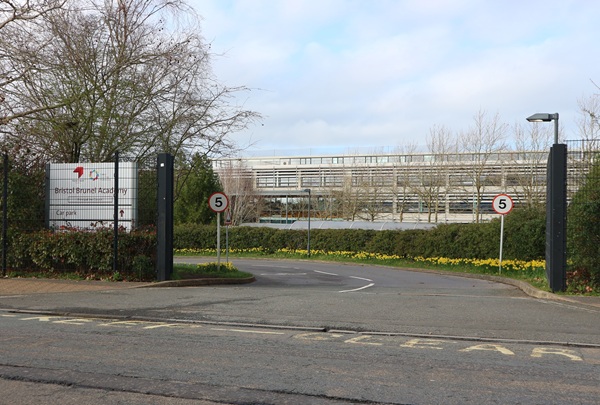
INSPECTORS sent into a secondary school following a row over the cancellation of an MP’s visit have found “no evidence” of political bias.
Ofsted made a snap focused monitoring inspection of Bristol Brunel Academy in January, after Chief Inspector of Schools Sir Martyn Oliver said he was concerned the school “may have been intimidated” into cancelling Bristol North East MP Damien Egan’s planned visit to talk with pupils.
The inspection was ordered after Communities Secretary Steve Reed said Mr Egan, whose constituency includes the school in Speedwell, had been “banned”.
Mr Reed claimed it was an example of anti-Semitism, on account of the MP’s Jewish faith.
The school insisted the visit in September had been postponed on safety grounds, after leaders learned of planned protests by unions and activists. It has now taken place, without being announced in advance.
The issue was raised at Prime Minister’s Questions in Parliament before Ofsted’s visit was announced.
The team of four inspectors said they were investigating “a potential insufficient observance of the Department for Education’s ‘Political impartiality in schools’ guidance”.
However their report, issued two weeks after the inspection, said: “Inspectors found no evidence to substantiate these concerns within the school.”
Ofsted said that while the postponement of Mr Egan’s visit was not the subject of the inspection, “leaders openly referenced the decision” and their concerns about the safety of children, staff and visitors if a protest went ahead outside the school gates.
‘Profound commitment’ to tolerance
The inspectors said the school’s leaders and trustees have a “profound commitment” to providing an inclusive environment, promoting tolerance and respect for diversity.
They said: “This school has a comprehensive and carefully-considered strategy for promoting and celebrating fundamental British values.
“Leaders at this school ensure political impartiality in the curriculum and teaching. If leaders’ high expectations are not met by staff or pupils, quick action is taken.
“Visitors to the school are welcomed. Leaders check thoroughly all visiting speakers, in line with Government guidance.
“Staff, including those from minority groups, spoke of the harmonious and religiously tolerant atmosphere in the school.”
The inspectors said 143 parents had responded to a survey and were “overwhelmingly positive about their children’s experiences”.
Cabot Learning Federation, which runs the school, has agreed to commission an independent review following the incident, and the inspectors said any relevant recommendations should be implemented.
CLF did not comment directly on the report.
Bristol National Education Union had accused Mr Egan, who is the vice-chair of the Labour Friends of Israel group, of supporting “Israel’s genocidal assault on Gaza”.
The union’s Bristol representative on the NEU’s governing body, Jon Reddiford, told the BBC staff had “no intention” of cancelling the MP’s original visit but had “wanted to show their opposition to a supporter of a genocidal regime coming to their school”.
He said any suggestion that the planned protest was because of the MP’s religion was “categorically untrue”.
Visit goes ahead
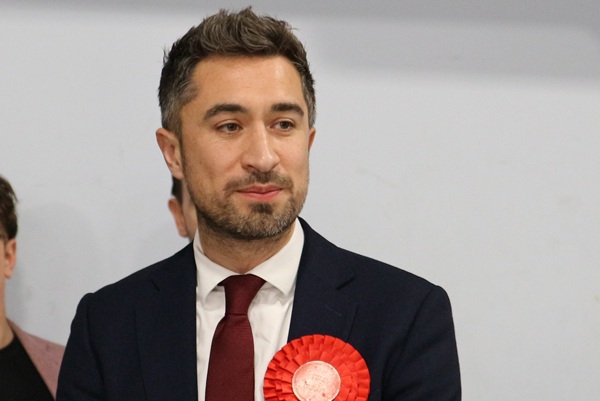
Mr Egan (above) told the Voice his visit to the school went ahead unannounced in February, and included a meeting with principal Jen Cusack and Cabot Learning Federation leaders.
He said: “The highlight was meeting the school council. We were supposed to be there for half an hour but we were there for an hour.”
Mr Egan said that “ironically”, there were no questions from students about Gaza.
He said: “We did talk about crime, safety, school provision for young people, votes at 16, the social media ban and local improvements – to be honest, questions I would get if I was talking to a group of adults.”
Mr Egan, whose husband is Israeli and has relatives in the country, said Labour Friends of Israel is a small, “progressive” group that has been pushing the government to fund a UK-hosted peace conference involving Israeli and Palestinian civil society groups.
He said: “Of course I don’t support genocide.
“A lot of this is based on assumptions of what I think.
“I want to see, whether people live in Israel, Gaza or the West Bank, them living happily, prosperously, and in a democracy.
“This is not about me so much as the democratic principle that MPs, of whatever party, should be able to go into schools in their constituencies.”