
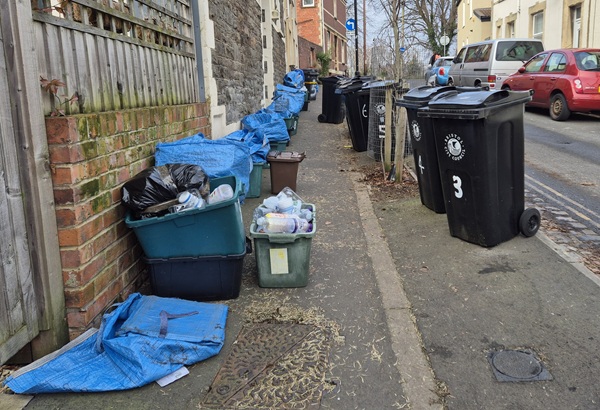
BLACK bins in Bristol will still be collected fortnightly, after councillors ditched controversial proposals to switch to a three-weekly collection.
Bristol City Council bosses floated the idea at the start of the year in a push to drive up recycling rates. But a public consultation showed more than two thirds of people opposed the changes and wanted to stick with a fortnightly collection schedule.
The changes would have affected households who get rubbish collected at the kerbside, rather than people who live in flats with large communal bins. Labour, Liberal Democrat and Conservative councillors opposed the switch, which the Greens were still supporting.
A three-weekly collection was vetoed by councillors on the environment policy committee yesterday.
It’s the second time in a row the Greens have failed to get cross-party support on this committee for controversial proposals, after a potential Clean Air Zone fee hike.
Labour councillor Kirsty Tait said: “Crucially, we know that 71% of residents said they do not want to shift to three-weekly collections. If we pride ourselves on listening to our communities, then that number matters.
“Right now, this proposal risks putting the stick before the carrot, tightening collections before showing we’ve used every available option to strengthen our recycling and reduce waste. How can we justify pressing ahead with a model that the public clearly does not want?”
Subject to funding, a new nappy collection service could soon be rolled out. This would prevent nappies and incontinence pads piling up in black bins, particularly posing a problem in the summer heat. A new fly-tipping round might also be launched, after fears that people whose bins have filled up could dump their rubbish elsewhere.
Recycling containers could still be refreshed, with new, larger containers. This came after resident feedback that containers were too small and flimsy. New large red sacks would be rolled out for plastic and cans, which could reduce the amount of rubbish blown across the street on collection day.
But North Somerset recently rolled out red sacks and has faced problems with them falling apart, especially if they were left in direct sunlight. However the red sacks would be different in Bristol and more durable.
Bristol recycles the most of its rubbish compared to other large cities in England. But recently recycling rates have stagnated, and new laws coming in mean the council has to try and keep these rates driving up. By reducing the amount people can throw away in their black bins, by collecting them less often, this would change people’s behaviour and get them recycling more.
Ken Lawson, the city council’s head of waste and recycling, said: “More local authorities are looking to step up their recycling performance and three-weekly is the way that it’s going. Somerset has gone, North Somerset has gone, South Glos is implementing, and now Wiltshire has voted to go that way as well.
“The evidence is that it will have a lasting positive impact on recycling, because it pushes people. What we’re doing with the proposal is also designed to pull people along, by offering them a greater chance to recycle.”
The changes would have saved the council money and reduced the amount of waste that’s sent to incinerators. Much of this rubbish is made of plastic which could be recycled, and emits greenhouse gases when incinerated.
Sending black bin rubbish to incinerators costs the council millions of pounds a year. Whereas recycled rubbish can be sold on to packaging producers, netting the council some income. So by encouraging people to throw away less into their black bins, such as food waste, then more money could then be ploughed into providing a better recycling service.
Green councillor Izzy Russell said: “I wouldn’t just take people’s response at a consultation, particularly one that had been egged on by a public petition dramatising the issue. I wouldn’t take that to be the only thing the public cares about, because at the end of the day, they do want cleaner streets and better recycling.
“And if this is the way that we get to it, then maybe we make ourselves unpopular for six months and then it gets better. The national government should also take some more responsibility around the UK’s waste in general. We should be taxing businesses more on plastic production. We’re obviously living in a society that’s producing much more waste than we’re built for.”
At the start of the year, the council initially also consulted on collecting black bins once every four weeks, as well as three weeks. Labour started a petition against monthly bin collections, attracting more than 12,000 signatures, and the Greens then said they wouldn’t support a four-weekly collection schedule.
By Alex Seabrook, Local Democracy Reporting Service